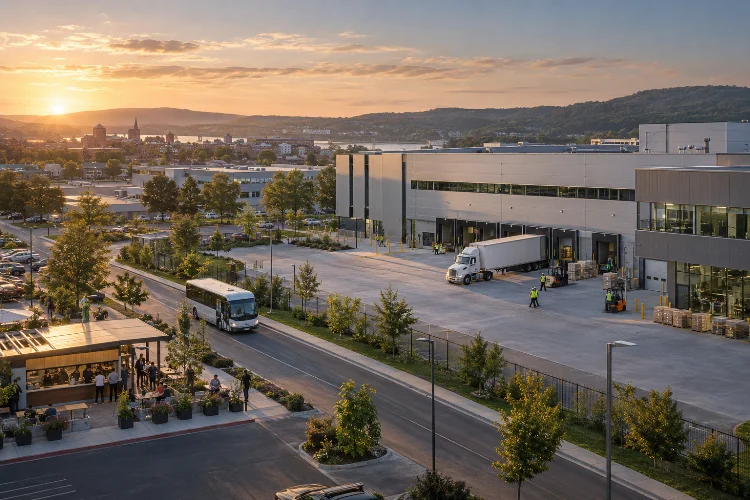
Imagine a new factory opening outside a small city. The most obvious result is that the factory hires production workers, supervisors, technicians, and managers. But the economic impact rarely stops at the factory gate.
Workers need transportation, nearby restaurants gain customers, logistics companies receive new contracts, suppliers increase production, and local businesses may hire extra employees. A single industry can therefore create layers of employment far beyond its most visible jobs.
Understanding how different industries create jobs and opportunities helps explain why economic growth is about more than simply adding companies.
Agriculture, manufacturing, healthcare, technology, construction, education, energy, and other sectors create employment in very different ways.
Some industries employ huge numbers of people directly. Others generate fewer direct positions but support extensive supply chains, specialized careers, entrepreneurship, and entirely new markets.
These connections are becoming increasingly important as technology, demographic change, urbanization, and the transition toward cleaner energy reshape the global labor market.
Why Industries Are Important for Job Creation
Industries create jobs when demand for their products or services increases.
A hotel hires more employees when tourism expands, a construction company recruits workers when new buildings are needed, and a software company grows its engineering team when more businesses adopt digital tools.
However, employment creation usually happens at several levels.
There are direct jobs, such as nurses working in hospitals or engineers working at energy companies. There are also indirect jobs created by suppliers, contractors, transportation providers, maintenance businesses, and other organizations supporting the main industry.
Finally, there are induced jobs. These appear when employees spend their wages on housing, groceries, entertainment, transportation, and other everyday needs.
This multiplier effect explains why the expansion of one sector can influence employment across an entire local economy.
The World Economic Forum estimates that major global trends could create around 170 million jobs by 2030 while displacing about 92 million, producing a net increase of approximately 78 million roles.
Agriculture Creates More Than Farming Jobs
Agriculture is one of the oldest sources of employment, but modern agriculture involves much more than planting crops or raising animals.
Farmers depend on machinery manufacturers, seed suppliers, irrigation specialists, veterinarians, transportation companies, food processors, wholesalers, retailers, and increasingly agricultural technology businesses.
Consider a commercial tomato farm. The farm may employ field workers directly, but harvested tomatoes must also be sorted, packaged, stored, transported, processed, marketed, and sold.
Agriculture Can Support Rural Economies
Agricultural development can be especially important in rural communities where alternative employment may be limited.
Investment in food processing can create additional opportunties because raw agricultural products gain value before reaching consumers.
Turning milk into cheese, cocoa into chocolate, or fruit into packaged juice creates positions in manufacturing, quality control, logistics, marketing, equipment maintenance, and retail.
Technology is also changing agricultural careers. Precision farming, drones, satellite monitoring, automated machinery, and data analysis are creating roles that combine traditional agricultural knowledge with digital skills.
Manufacturing Builds Large Employment Networks
Manufacturing often has one of the clearest links between production and wider job creation.
A car factory, for example, does not simply employ people who assemble vehicles. It depends on businesses producing steel, glass, electronics, tires, batteries, seats, software, industrial machinery, and thousands of smaller components.
The sector also supports engineers, designers, accountants, warehouse employees, safety specialists, sales teams, and logistics workers.
Manufacturing can therefore create large supply-chain networks connecting businesses of very different sizes.
Modern factories are becoming more automated, but automation does not necessarily mean that every manufacturing job disappears. Instead, the mix of skills changes.
Companies may need fewer employees performing repetitive manual tasks while requiring more technicians, programmers, maintenance specialists, robotics operators, and production engineers.
Construction Turns Investment Into Local Jobs
Construction is another sector with a strong employment multiplier.
Building a new airport, housing development, highway, school, hospital, or office complex requires architects, civil engineers, electricians, plumbers, equipment operators, carpenters, surveyors, safety professionals, and general laborers.
It also creates demand for cement, steel, timber, machinery, transportation, furniture, and many other products.
One major advantage of construction is that many jobs must be performed where the project is located. This means infrastructure investment can generate employment directly within local communities.
The benefits may continue after construction finishes. A new road might improve access to markets, while better ports, electricity, and internet infrastructure can make an area more attractive to businesses.
Infrastructure can therefore create jobs today while making future economic activity easier.
Service Industries Create Diverse Career Paths
Services represent an enormous range of economic activities, from restaurants and tourism to banking, transportation, consulting, entertainment, and professional services.
A growing tourism destination provides a simple example.
Visitors create demand for hotel employees, restaurant workers, tour guides, drivers, travel agents, event organizers, cleaners, security staff, photographers, and local retailers. Tourism spending can then circulate through the surrounding economy.
Professional services create a different type of employment. Companies increasingly rely on accountants, consultants, lawyers, digital marketers, designers, financial analysts, cybersecurity specialists, and human-resource professionals.
These roles demonstrate that job creation is not limited to businesses producing physical goods.
Service industries can also provide relatively accessible entry points into employment because educational requirements vary widely, from positions requiring short-term training to highly specialized professional careers.
Technology Creates Jobs While Transforming Existing Ones
Few industries illustrate economic change as clearly as technology.
Software companies directly employ developers, engineers, designers, product managers, data scientists, and cybersecurity specialists. But technology also creates employment by helping other industries build new products and services.
Banks hire software engineers. Hospitals employ health-information specialists. Retail businesses need e-commerce managers. Manufacturers recruit automation technicians.
The World Economic Forum identifies big data specialists, fintech engineers, AI and machine-learning specialists, and software developers among the fastest-growing roles in percentage terms through 2030.
Technology can eliminate or reduce certain tasks at the same time. The important point is that labor markets evolve rather than simply expanding in a straight line.
Workers who continuously develop digital, analytical, communication, and problem-solving skills are generally better positioned to adapt to this changing enviroment.
Healthcare and Education Grow With Human Needs
Some industries expand because of demographic and social changes rather than new consumer products.
Healthcare is a strong example. Aging populations, chronic diseases, medical innovation, and greater access to healthcare can increase demand for doctors, nurses, technicians, caregivers, therapists, administrators, and medical support workers.
In the United States alone, the Bureau of Labor Statistics projects roughly 1.9 million healthcare occupation openings per year on average from 2025 to 2035, including both growth and replacement needs.
Healthcare also supports jobs in pharmaceuticals, medical equipment, insurance, laboratories, cleaning services, technology, and facility managment.
Education creates similar networks. Schools and universities employ teachers, but they also need administrators, librarians, counselors, IT specialists, maintenance teams, curriculum developers, and support staff.
Online education has expanded the ecosystem further by creating demand for instructional designers, video producers, platform developers, tutors, and digital learning specialists.
Green Energy Is Opening New Employment Opportunities
The shift toward cleaner energy is creating another growing employment ecosystem.
Solar installations need engineers, electricians, technicians, construction workers, sales teams, project managers, and maintenance crews. Wind projects require manufacturing, transportation, installation, monitoring, and specialized engineering.
The International Energy Agency reported that global energy employment exceeded 67 million workers in 2023 after the sector added nearly 2.5 million jobs that year. Clean-energy activities accounted for around 1.5 million of those additional positions.
The transition also creates opportunities beyond renewable electricity. Electric vehicles, batteries, energy-efficient buildings, grid modernization, recycling, and environmental consulting can all generate new occupations.
However, workers need access to training so they can move into these emerging roles as older industries change.
New Industries Also Create Opportunities for Entrepreneurs
Job creation does not only happen when large corporations hire employees.
Industry growth creates spaces for small businesses.
A booming construction market may create demand for independent electricians, equipment rental companies, catering businesses, cleaning contractors, and transportation services.
Growth in e-commerce can create opportunities for delivery companies, packaging suppliers, online sellers, content creators, and digital agencies.
The World Bank emphasizes infrastructure, energy, agribusiness, healthcare, tourism, and value-added manufacturing among sectors where supportive policies and investment can help unlock significant employment potential.
This means people looking for economic opportunities should not only ask, “Which companies are hiring?”
Another useful question is: What new problems are growing industries creating that someone could build a business around?
Sometimes the best opportunity is not inside the industry itself, but in supplying something that industry needs.
Skills Connect People With Growing Industries
Industries can create thousands of positions, but those jobs have limited impact if workers do not have the skills employers require.
This is why education, vocational training, apprenticeships, and reskilling programs are so important.
Someone does not necessarily need a university degree for every growing sector. Construction trades, manufacturing technicians, healthcare support occupations, logistics, renewable-energy installation, hospitality, and many digital roles offer multiple entry routes.
The key is watching where demand is moving and developing skills that remain availble across different employers.
Technical knowledge matters, but communication, teamwork, adaptability, creativity, and problem-solving are also increasingly valuable because these abilities transfer between industries.
Understanding how different industries create jobs and opportunities reveals how connected an economy really is.
Agriculture supports processing and logistics, manufacturing builds supply chains, construction stimulates local demand, technology transforms other sectors, while healthcare, education, services, and clean energy respond to changing human and economic needs.
The biggest employment opportunities are often created where industries overlap. Technology meets healthcare, energy connects with construction, and agriculture combines with manufacturing and logistics.
For workers, students, entrepreneurs, and career changers, the practical lesson is simple: follow growing industries, but also pay attention to the businesses and skills developing around them.
Instead of preparing for just one job title, explore the wider ecosystem. Understanding where industries are heading can help you identify opportunities before they become obvious to everyone else.